

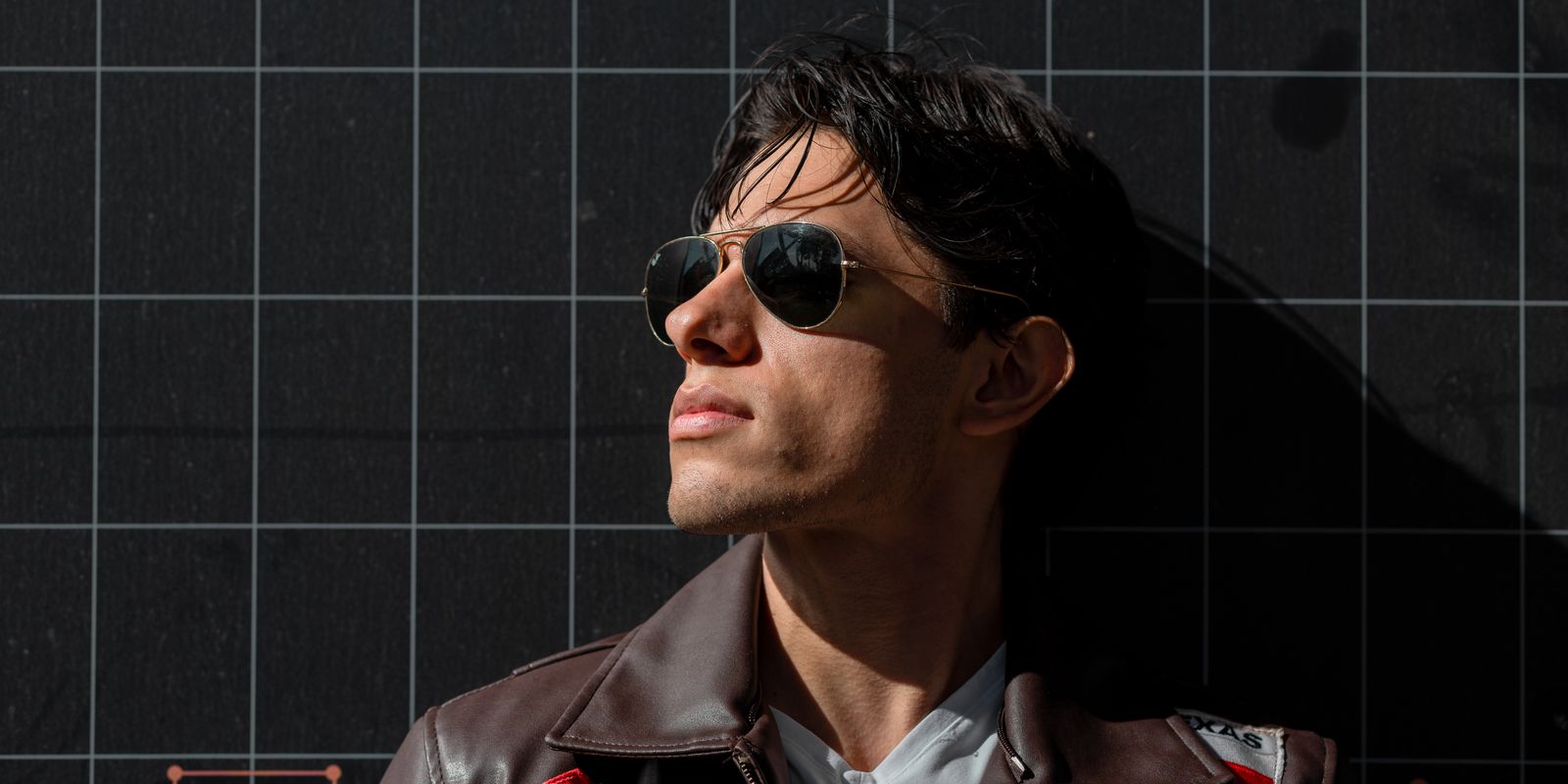
Aviator, bomber, flight jacket: three names that get thrown around as if they are interchangeable, and three jackets that are not quite the same thing. If you have ever hovered over a product page unsure whether you are looking at a bomber or an aviator, you are not alone. The labels overlap, the history tangles them together, and plenty of shops use the words loosely. This guide untangles it. By the end you will know exactly what separates an aviator jacket from a bomber jacket, what A-2, G-1, B-3 and MA-1 really mean, and which one belongs in your wardrobe.
Flight jacket is the family name. Aviator and bomber are two cousins in it: one built for warmth, the other built for movement.
The one-line answer
If you remember nothing else, remember this. A flight jacket is any jacket originally designed for aircrew. An aviator jacket is the heavy, warm, fur-collared kind, usually leather or sheepskin, made for freezing cockpits. A bomber jacket is the shorter, waist-length kind with ribbed knit cuffs, collar and hem, lighter and easier to wear every day.
So aviator and bomber are both flight jackets. The difference is weight, length and collar. An aviator wraps you in warmth and makes a statement. A bomber keeps the clean, cropped silhouette and slips into almost any outfit. Everything below is just detail on top of that simple idea.
Where the names come from
The confusion makes sense once you know the history, because all of these jackets were born in the same place: military aviation in the first half of the twentieth century.
Early pilots flew in open cockpits, exposed to brutal cold and wind. The first solution was thick leather and fur. The B-3, introduced in the 1930s, was a heavy sheepskin jacket with the fleece turned inward and a large collar you could pull up against the wind. Britain’s RAF Irvin jacket did the same job on the other side of the Channel. These are the original aviator jackets: big, warm and unmistakable.
As aircraft gained enclosed, heated cockpits, crews no longer needed that much bulk. Lighter leather jackets took over. The A-2, adopted by the US Army Air Corps in 1931, was a trim brown leather jacket with a shirt collar, snap front and knit cuffs. The US Navy’s G-1 was its close cousin, with a fur collar and a bi-swing back. After the war, nylon arrived, and the MA-1 became the lightweight, slim, ribbed jacket that most people now picture when they hear the word bomber.
So the lineage runs from the heavy sheepskin aviator, through the leather A-2 and G-1, to the nylon MA-1 bomber. Same family, lighter and lighter with each generation.
Aviator jacket: the warm one
An aviator jacket is defined by warmth and presence. The classic version is cut in leather or sheepskin, sits a little longer on the body, and carries a generous collar, often fur-trimmed, that you can fasten high against the cold. The B-3 is the archetype: thick, rugged and built to survive an open cockpit at altitude.
In modern wardrobes, an aviator is a winter statement piece. It is the jacket that fills a doorway, that looks deliberately vintage, that pairs beautifully with simple jeans and boots because it needs no help to stand out. The trade-off is weight and volume. It layers less easily under a coat, and the collar adds bulk at the neck. If you love that rugged, heritage look and you feel the cold, it is exactly right.
Buneri builds this style in real sheepskin leather with a premium faux fur lining and collar, so you get the heritage silhouette and the warmth without any compromise on our materials. The BUNERI Brown Ginger Aviator Sheepskin Pilot Jacket is a warm, pilot-collared take in a rich ginger-brown that leans fully into the vintage aviator look.
If you want the aviator attitude in a sharper, more urban cut, a cross-zip biker version keeps the sheepskin warmth but trims the shape. The Black Sheepskin Aviator Cross Zip Biker Jacket blends the aviator collar with a moto front for something that reads tougher and more modern.

Bomber jacket: the versatile one
A bomber jacket is defined by its silhouette: short, ending right at the waist, with ribbed knit at the cuffs, collar and hem that pull the shape in. That ribbing is the giveaway. It is what gives a bomber its neat, slightly blouson line and its easy, modern feel.
Because it is lighter and cropped, a bomber is far more versatile than an aviator. It layers under a topcoat, works over a hoodie or a shirt, suits nearly every body type, and moves effortlessly from weekend casual to smart-casual. In leather, it gains a richness and a little edge that the original nylon MA-1 never had. The G-1 sits in the sweet spot here, a leather bomber with a touch of collar warmth but a far trimmer cut than a B-3.
The BUNERI Brown Leather Bomber Flight Jacket is a clean, classic leather bomber, waist-length with ribbed trims, that does exactly what a bomber should: it goes with everything and asks for nothing.
In sheepskin leather with our premium faux fur where the design uses it, a Buneri bomber keeps that clean flight-jacket line while staying warm enough for real winters, not just mild autumn evenings.
Aviator vs bomber: the differences that actually matter
Strip away the names and four things separate the two styles.
- Length. An aviator sits lower on the hip and can feel like a short coat. A bomber stops at the waist, always.
- Collar. An aviator has a large collar, often fur-trimmed, that you can turn up. A bomber has a flat ribbed collar or a small stand.
- Weight and warmth. An aviator is heavy and very warm, built for cold. A bomber is lighter and layers more easily.
- Cuffs and hem. A bomber has ribbed knit cuffs and hem. An aviator usually has leather or buckled cuffs and a straight hem.
If a jacket is long, heavy and fur-collared, it is an aviator. If it is short with ribbed trims, it is a bomber. If it has a leather body, a shirt or fur collar and knit cuffs but a trim cut, you are looking at an A-2 or G-1, which sit neatly between the two.
How to choose: a quick checklist
Run through these five questions and the right jacket becomes obvious.
- How cold is your winter? Serious cold favours a sheepskin aviator. Mild winters and layering favour a bomber.
- Statement or staple? Want the jacket to be the center of the outfit? Aviator. Want it to go with everything? Bomber.
- Do you layer under a coat? If yes, a trim bomber fits underneath far better than a bulky aviator.
- What shape suits you? Cropped bombers lengthen the leg and flatter most builds. Longer aviators read bold and rugged.
- Casual or smart-casual? A bomber flexes between both. An aviator leans firmly casual and vintage.
There is no wrong answer, only the one that fits your climate, your frame and the look you are after. Many people end up owning one of each, a bomber for everyday and an aviator for deep winter.
The last word
Aviator, bomber and flight jacket are not three names for the same thing, and now the differences are clear. Flight jacket is the whole family. The aviator is the warm, fur-collared, heritage end of it, and the bomber is the light, cropped, everyday end, with the A-2 and G-1 bridging the gap. Decide how much warmth and presence you want, and the choice makes itself. Every Buneri jacket is hand-made to order in sheepskin leather with a premium faux fur lining where the style calls for it, shipped free from our own workshop in about two weeks, with made-to-measure available (fixed $49 surcharge) and a 30-day return, so whichever style you choose, it is built to fit you.
Frequently asked questions
What is the difference between an aviator jacket and a bomber jacket?
The short version is that an aviator jacket is a type of flight jacket built for warmth, usually in leather or sheepskin with a shearling-style collar, while a bomber is a shorter, waist-length style with ribbed cuffs and hem. Aviator jackets, such as the B-3 and the RAF Irvin, were made for high-altitude bomber crews who needed serious insulation, so they are heavier, longer and often have a large fur-trimmed collar. Bomber jackets grew out of the same military flight program but became lighter and more cropped, with the MA-1 nylon flight jacket setting the template that most people picture today. In everyday language, aviator usually means the big, warm, fur-collared leather jacket, bomber means the trim ribbed-cuff silhouette, and flight jacket is the umbrella term that covers both. Buneri makes both styles in real sheepskin leather with a premium faux fur lining where the design calls for it.
Is a flight jacket the same as a bomber jacket?
Not exactly, although the words are often used as if they mean the same thing. Flight jacket is the broad historical category for any jacket designed for aircrew, which includes leather models like the A-2 and G-1, heavy sheepskin aviators like the B-3, and nylon styles like the MA-1. A bomber jacket is one shape within that family, specifically the short, waist-length cut with ribbed knit cuffs, collar and hem. So every bomber is a flight jacket, but not every flight jacket is a bomber. A long, fur-collared B-3 aviator is a flight jacket but nobody would call it a bomber, while a slim ribbed MA-1 style is both. When you shop, it helps to look at the actual cut and material rather than the name on the label, because retailers use these terms loosely.
What do A-2, G-1, B-3 and MA-1 mean?
They are the original military designations for specific flight jackets, and they still describe the styles today. The A-2 is the classic brown leather flight jacket adopted by the US Army Air Corps in 1931, with a shirt-style collar, snap front and knit cuffs, and it is the jacket most associated with WWII pilots. The G-1 is the US Navy equivalent, similar in shape but with a fur collar and a bi-swing back for movement. The B-3 is the heavy sheepskin aviator worn by high-altitude bomber crews, thick and warm with a big collar, built for freezing open cockpits. The MA-1 is the post-war nylon bomber, slimmer and lighter, with the famous ribbed cuffs and reversible orange lining. Buneri offers modern takes on the G-1 and B-3 style family in sheepskin leather, so you get the look with everyday wearability.
Which should I choose, an aviator or a bomber jacket?
It comes down to warmth, formality and the shape you prefer. Choose an aviator if you want maximum warmth and presence, a jacket that reads rugged and vintage, and you do not mind extra weight and volume around the collar. It is ideal for cold winters and bold, heritage styling. Choose a bomber if you want something lighter and more versatile that layers easily under coats, suits most body types and moves between casual and smart-casual without effort. A G-1 style bomber is the middle ground, with a leather body and a cozy collar but a trimmer cut than a full B-3. Every Buneri jacket is hand-made to order in our own workshop in sheepskin leather, with made-to-measure available (fixed $49 surcharge) so the fit is built around you, free shipping and a 30-day return, so you can pick the style that matches your climate and your wardrobe with confidence.